Thinking about buying a townhome near The Gulch and running it as a non-owner-occupied short-term rental? In a high-demand pocket like this, small assumptions can swing your returns in a big way. You want a clear, defensible underwriting process that investors, lenders, and partners trust. In this guide, you’ll learn how to price with local comps, plan for Nashville’s event-driven calendar, model realistic expenses, and stress test your pro forma. Let’s dive in.
Start with the underwriting goal
Your objective is to convert local market inputs and operating costs into a probabilistic cashflow model that supports valuation and risk management. You’ll aim to forecast revenue and expenses, then evaluate NOI, cash-on-cash return, and reserves under different scenarios.
Focus on these core metrics:
- ADR: average daily rate per booked night.
- Occupancy: percent of available nights booked.
- RevPAR: ADR multiplied by occupancy, your best cross-asset benchmark.
- Gross rental revenue: ADR multiplied by occupied nights, plus cleaning fees if you treat them as revenue.
Use RevPAR for quick stress tests, then build up the calendar view when you need more precision.
Build defensible ADR and occupancy
Use neighborhood-level comps
The Gulch is central and walkable, so market performance can exceed city averages. Rely on neighborhood data and listings within a tight radius.
- Define the product: entire home, townhome or rowhouse, same bedroom and bathroom count, similar bed count and sleeping capacity, and similar square footage.
- Map your radius: stay within 0.25 to 0.5 miles. Walkability changes fast here.
- Prioritize proven listings: target comps with more than 50 reviews and steady calendars. Note newer listings that may be underpricing.
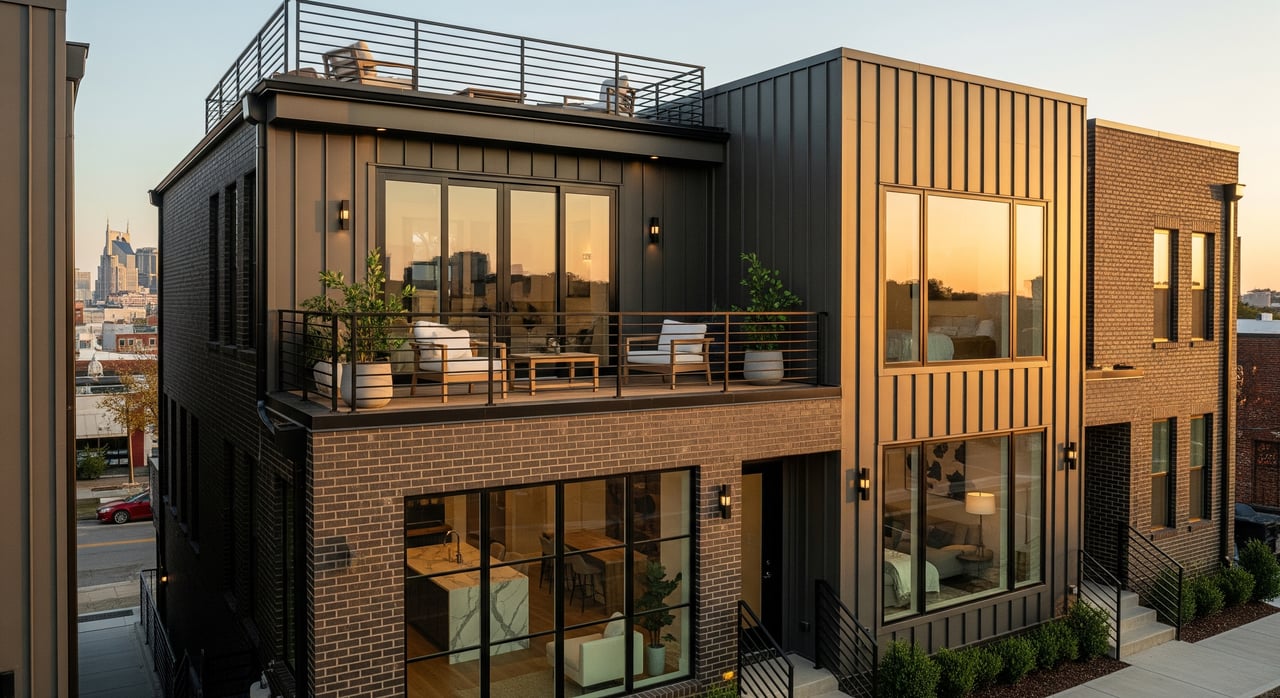
- Adjust for amenities: parking, rooftop access, outdoor space, elevator, workspace, high-speed internet, laundry.
- Note policies: minimum stays and strict cancellations can reduce occupancy while supporting higher ADR.
Extract and normalize rates
Pull a neighborhood-level STR report that shows historical ADR, occupancy by month, and RevPAR for The Gulch. Validate with manual checks across a 12-month calendar on major platforms to see weekday versus weekend pricing and event spikes.
Normalize to the host’s view:
- Remove guest service fees to get net ADR to owner.
- Treat cleaning fees separately, both on the revenue and expense sides.
- Account for the effect of minimum night settings on occupancy.
Convert to RevPAR for modeling
RevPAR rolls ADR and occupancy into one number. Build a base RevPAR from comps and then layer in seasonality and event impacts. Avoid citywide averages and ground your inputs in The Gulch and adjacent blocks.
Model seasonality and events
Nashville patterns near The Gulch
Tourism is event-driven, with strong peaks around major music festivals, awards weeks, and summer travel. The Gulch benefits from weekend leisure demand and weekday business travel tied to conventions and corporate events.
- Expect outsized weekend demand due to proximity to restaurants, nightlife, and venues.
- Shoulder seasons can be strong if large events overlap.
- Weekday demand varies with convention center bookings and corporate calendars.
Plan your calendar strategy
Treat your calendar like its own revenue engine.
- Build a base monthly curve from local historical data. Then apply event multipliers for confirmed dates.
- For major events, ADR often lifts 50 to 200 percent, and occupancy may approach full for central properties. Set longer minimums around multi-day events.
- Differentiate weekday and weekend pricing. Tune minimum stays to balance turnover and occupancy.
- Block owner use and maintenance days in advance to avoid surprises.
Itemize operating expenses
Cleaning and turnover
Model cleaning per stay. You can pass a cleaning fee to guests, but still record the actual cleaning cost as an expense.
- Typical cleaning costs for an urban townhome often fall in the 75 to 250 dollar range per turnover. Get local quotes for your exact size and setup.
- Plan for deep cleans and periodic linen replacement in your capex reserve.
Management and platform fees
Full-service STR management commonly charges roughly 20 to 35 percent of rental revenue depending on scope. If you self-manage, budget for the tools and time you will outsource.
- Platform host fees are often around 3 percent for many listings on some platforms. Others use different fee or subscription structures. Reflect host fees as a percentage of gross rental revenue or per booking.
Utilities and operating supplies
Electricity, gas, water, sewer, internet, and streaming all add up. Model monthly estimates with a seasonal view for HVAC. Include guest supplies and small wares.
Insurance, taxes, HOA
STR-specific insurance or a commercial endorsement is recommended for liability, loss of income, and damage. Treat property taxes as fixed, and model occupancy taxes as collected and remitted or as a cost if you absorb them. Confirm HOA dues and special assessments, and verify that the HOA allows non-owner-occupied short-term rentals.
Capex and reserves
Budget for furniture refresh, appliance replacement, repairs, and compliance updates. A common approach is 5 to 10 percent of gross revenue or a fixed amount per night, for example 3 to 15 dollars.
Permits and compliance in Davidson County
STR permitting and zoning
Metro Nashville and Davidson County administer permits and safety requirements for short-term rentals. Rules can differ for non-owner-occupied properties, and some areas have overlay districts with special limits. Verify current rules and the property’s eligibility before you rely on NOO STR income.
Taxes and remittance
Transient occupancy and related taxes typically apply to short-term rentals. Platforms may collect and remit in some cases, but reporting or registration can still be your responsibility. Confirm the current state and local requirements before launch and include them in your model.
HOA and lender requirements
Many townhome associations either restrict or ban short-term rentals. Secure the covenants and all amendments, check enforcement history, and confirm insurance and lender acceptability for NOO STR use. Model the cost and timing of compliance.
Build the pro-level model
Core inputs to include
- Property profile: bedrooms and bathrooms, sleep capacity, square footage, parking, year built, condition, and furnishing budget.
- Market inputs: baseline ADR by weekday and weekend, monthly occupancy curve, and event uplift factors.
- Operations: cleaning cost per turnover and cleaning fee collected, management percentage or fixed fee, platform host fee, utilities, HOA dues, property taxes, insurance, internet, and subscriptions.
- Reserves and capex: a percentage of gross revenue or fixed dollars per night for replacements and refreshes.
- Financing: debt service, interest rate, amortization, and closing costs if applicable.
- Regulatory and taxes: permit fees, inspections, and occupancy tax treatment.
Sensitivity and break-even analysis
Run Base, Optimistic, and Conservative scenarios by adjusting ADR and occupancy independently and together. For event-heavy markets, include a scenario with minimal event uplift.
Break-even occupancy formula:
- Break-even occupancy equals annual fixed costs plus annual debt service plus target NOI, divided by 365 times ADR minus variable cost per occupied night.
- Variable cost per occupied night equals cleaning cost per stay divided by average nights per booking, plus utilities per night, plus platform host fee per night.
Rank variables by their impact on NOI. ADR, occupancy, management percentage, cleaning cost, and reserves usually drive the biggest changes.
Stress tests for risk management
Model a temporary loss of event uplift, a platform delisting period, or a forced conversion to long-term rental. Include legal or transition costs and an operating reserve. For highly event-driven assets, consider three to six months of operating expenses as a prudent reserve.
Practical checklist before you finalize
- Pull a 12-month neighborhood STR report for The Gulch that matches your property type.
- Manually spot-check 10 to 15 comparable listings for rates and availability across weekdays, weekends, and known events.
- Get three local cleaning quotes sized to your townhome and turnover plan.
- Collect two to three proposals from STR managers with scope and pricing.
- Review HOA covenants and amendments for NOO STR permissions and procedures.
- Confirm Metro Nashville STR permit requirements and transient occupancy tax steps.
- Obtain STR insurance quotes and verify lender acceptability.
How we help in The Gulch
If you want a faster, cleaner path from acquisition to a performing listing, you benefit from a team that designs, builds, furnishes, and underwrites under one roof. With a vertically integrated approach, you get neighborhood-specific pricing strategy, hospitality-grade staging, and an operational plan aligned to your pro forma.
Here is how you can leverage our model:
- Neighborhood comps and pricing strategy tailored to The Gulch.
- Pro-level underwriting that layers events, minimum stays, and fees into a calendar-driven model.
- Vendor coordination for cleaning, management, and photography so your operations match the P&L.
- Design-forward furnishing and hospitality staging that supports premium ADR and reviews.
Ready to underwrite or reposition a townhome near The Gulch? Connect with Beth Dodd for a free valuation and consultation.
FAQs
What is a non-owner-occupied short-term rental in Nashville?
- It is a property you do not personally occupy that is rented for short stays, and it typically requires specific permits and compliance steps administered by Metro Nashville.
How should I select comps for a Gulch townhome STR?
- Match property type and capacity, stay within 0.25 to 0.5 miles, prioritize listings with strong reviews, and adjust for amenities like parking and rooftop access.
How do events impact pricing near The Gulch?
- Major festivals, awards weeks, home games, and arena concerts can lift ADR significantly and push occupancy near full for central properties, so plan event multipliers in your model.
What cleaning fee and cost should I use in my pro forma?
- Collect local quotes for your configuration and model cleaning per stay, noting that urban townhome cleanings commonly range from about 75 to 250 dollars.
What management and platform fees should I expect?
- Full-service management often runs roughly 20 to 35 percent of rental revenue, and many host fees on major platforms are around 3 percent, with variations by platform and plan.
What reserves are prudent for an event-driven STR?
- Many operators set aside 5 to 10 percent of gross revenue or a fixed amount per night, and they also maintain several months of operating expenses as a safety reserve.